Increasing Graphic Efficiency for Remote Video Editors in 2026

Development of GPU Partitioning in Windows Server 2026
Remote workplace in 2026 have moved far beyond the fundamental delivery of workplace applications and web internet browsers. As businesses increasingly move their most demanding workloads to the cloud or centralized data centers, the requirement for hardware acceleration has actually transitioned from a specific niche requirement to a standard expectation. Windows Server 2026 introduces a number of shifts in how visual processing systems (GPUs) are shared across virtual circumstances, enabling a much higher density of users without compromising the performance needed for high-end tasks.The most considerable change in 2026 includes the maturation of GPU Partitioning (GPU-P) In previous years, administrators often had to select in between Discrete Device Task (DDA), which devoted a whole physical GPU to a single virtual device, or older shared innovations that fought with modern API support. Windows Server 2026 has actually fine-tuned GPU-P to a point where hardware resources are split at the driver level with near-native performance. This allows a single physical card to support lots of users carrying out CAD work or video editing simultaneously.Organizations that focus on Asia Virtual Solutions Spec Guide find that these improvements reduce the total expense of ownership for high-performance clusters. By utilizing the most recent scheduling algorithms in the Windows kernel, the system can dynamically assign cycles based upon real-time demand. If a user in a remote session begins a 3D render, the server can briefly move resources from idle sessions to make sure the render surfaces rapidly, then return those resources to the basic swimming pool.
Enhancing Windows Server 2026 for High-Demand Business Tools
Scaling a remote desktop environment in 2026 requires more than just including more RAM or faster processors. The traffic jam has relocated to how information journeys in between the GPU and the network user interface card (NIC) With the rise of PCIe 6.0 in server hardware, the internal throughput of these devices has increased, permitting much lower latency when frames are captured and encoded for remote transmission.Windows Server 2026 was developed with these high-speed buses in mind. The OS now includes native support for advanced direct memory access (DMA) transfers, which bypass the CPU for most visual jobs. This lowers the overhead on the system processors, letting them manage more concurrent users or background logic while the GPU and NIC manage the heavy lifting of the visual stream.In many major business centers, the demand for low-latency remote access has surged as specialized software application ends up being more complex. Engineering firms, medical imaging centers, and information science groups no longer desire to manage costly workstations at every desk. Instead, they centralize their power in the server room. The adoption of Asia Virtual Solutions VPS Capacity Analysis has become a basic practice for many IT departments seeking to provide this level of performance throughout dispersed groups.
The Effect of AV1 and H. 265 Encoding Standards
Encoding is the unrecognized hero of hardware acceleration in 2026. Even with an effective GPU, a remote session will feel sluggish if the video stream is too large for the readily available bandwidth. Windows Server 2026 completely incorporates AV1 hardware encoding as a main choice for Remote Desktop Protocol (RDP) sessions.AV1 offers considerably much better compression than older standards like H. 264, providing the exact same visual quality at approximately half the bit rate. This is particularly important for users working on 4K or 8K displays. When the hardware velocity deals with the AV1 encode, the result is a crisp, responsive user interface that seems like a local maker. For organizations operating in areas with inconsistent web speeds, this effectiveness is the distinction in between a productive workday and a frustrating series of lag spikes.Furthermore, the most recent version of RDP includes a "variable frame rate" mode that works in tandem with the server's GPU. Throughout fixed jobs, like reading a file, the frame rate drops to conserve bandwidth and power. The minute a user begins an animation or moves a complicated 3D model, the hardware increases to 60 or 120 frames per second. This intelligent scaling is managed completely by the hardware acceleration layer, needing no manual tuning from the administrator.
Memory and Storage Bottlenecks in Accelerated Environments
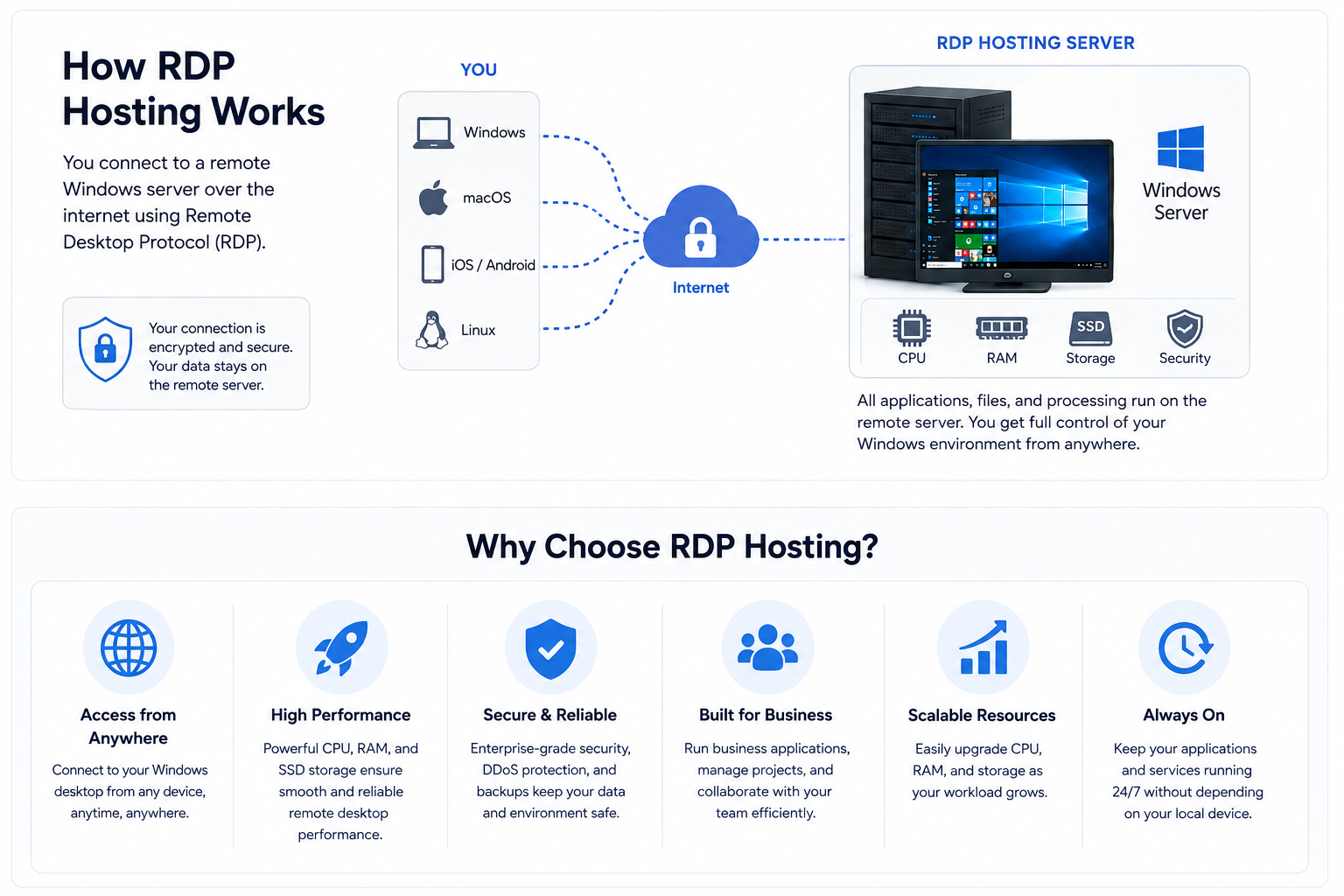
While GPUs get the majority of the attention, the function of system memory and storage can not be disregarded when scaling Windows Server 2026. High-density remote desktop servers in 2026 often use DDR6 memory, which supplies the needed bandwidth to feed modern GPUs. Without quick RAM, the GPU will sit idle while waiting on textures and model data to load, producing micro-stuttering in the user session.Storage has also seen a shift towards NVMe Gen6 drives that provide consecutive read speeds surpassing 15 GB/s. In a multi-user environment, the "boot storm" that occurs when everybody logs in at 9:00 AM can overwhelm conventional storage varieties. Windows Server 2026 addresses this through improved storage caching that works straight with the hardware acceleration stack. Typical assets, such as system icons, UI elements, and shared application files, are cached in a way that the GPU can access them practically instantly.This synergy in between storage, memory, and processing power enables a much smoother experience. When a user opens a heavy application like a 2026-era architectural suite, the system utilizes "direct storage" paths to move data from the NVMe drive to the GPU memory. This bypasses several layers of legacy software application, cutting load times by approximately 70% compared to systems from a few years earlier.
Handling Resource Contention and Quality of Service
One of the biggest obstacles in a shared environment is the "loud neighbor" result, where one user's intensive task slows down everyone else on the same physical server. In 2026, Windows Server has presented more granular Quality of Service (QoS) controls for hardware acceleration. Administrators can now set difficult limits on GPU memory and compute cycles per user.For example, a junior designer may be capped at 4GB of VRAM, while a lead engineer has access to 16GB. These limits are enforced at the hardware level, guaranteeing that even if one user's application crashes or efforts to take in all available resources, the remainder of the server stays stable. This level of control is vital for remote hosting providers who need to ensure a certain level of performance to various tiers of users.Monitoring these environments has also ended up being more sophisticated. The 2026 management consoles supply real-time telemetry on GPU temperature, encoder load, and bus saturation. This data allows IT teams to recognize bottlenecks before they impact the user experience. If a specific server is consistently performing at 90% GPU load, the system can instantly recommend moving some sessions to a various node in the cluster.
The Increase of AI-Assisted Remote Desktops
Hardware velocity in 2026 isn't almost pixels; it has to do with intelligence. Lots of contemporary business tools now include AI-driven features, such as real-time background noise removal in video calls, automated image tagging, or predictive text generation. Windows Server 2026 can offload these AI tasks to the Tensor cores found on contemporary GPUs.This offloading is vital for scaling. If the primary CPU needed to manage all the AI processing for 50 users simultaneously, it would rapidly become a traffic jam. By utilizing the specialized hardware on the GPU, the server can deal with these "smart" features with really little influence on general system performance. This allows services to utilize the most recent AI-integrated software without needing to update their whole server fleet every year.
Planning for the Future of Remote Facilities
As 2026 advances, the pattern toward centralized, sped up computing programs no indications of slowing down. The mix of Windows Server 2026 and the latest hardware makes it possible to deliver a high-end experience to any gadget, whether it's a thin client, a tablet, or a re-purposed older laptop.For organizations aiming to refresh their infrastructure, the focus ought to be on modularity. GPU technology moves faster than CPU technology, so choosing server chassis that permit easy GPU upgrades is a wise relocation. In addition, as network speeds continue to enhance, the physical area of the server ends up being less crucial than the quality of the hardware acceleration it provides.In the end, the success of a remote desktop release in 2026 comes down to how well the software application and hardware interact. Windows Server 2026 has actually bridged the space that existed in earlier versions, providing a structure that can handle the most demanding organization tools with ease. By understanding the complexities of GPU partitioning, encoding requirements, and resource management, IT experts can construct environments that are both effective and affordable.